
Cortland County Arrest Log Sources
Cortland County publishes no complete weekly booking log. The Sheriff posts nothing promising a 72-hour or seven-day arrest list. The closest official stream is the Sheriff’s News and Press Releases archive. Arrest narratives appear among the agency notices. A release may name the defendant, the arrest date, and the alleged charges. Bail terms, court, or release conditions can appear too. The agency decides what runs and when. A missing post does not mean no arrest happened. City of Cortland Police, Homer Village Police, New York State Police, and SUNY Cortland University Police all create their own records. Some arrests end in the Cortland County Jail, while an appearance ticket or a quick release may never show up in a jail search at all.
Read the Cortland Police Blotter
Start with the official releases, then widen the net. Headlines often say just “Cortland” or “Homer” without naming the agency behind the report. That agency decides where a records request goes.
- Search the Sheriff release archive by date, name, town, and incident type. Open the item and record the underlying arrest date.
- Identify the arresting agency. Do not assume the Sheriff made an arrest merely because the county jail later held the person.
- Check the relevant local outlet for delayed or grouped blotter coverage. Note whether it cites Sheriff, City Police, State Police, Homer Police, or campus police.
- Use VINELink or the jail only to confirm current participating county custody. A blotter and a live roster answer different questions.
- Confirm the case outcome with the proper court. County felony files, City Court matters, and town or village cases can follow different clerk paths.
For same-day arrests in Cortland County, the 24 Hour Arrests route works better. It favors live custody.
Cortland Arrest-Log Entry Fields
The release archive tells stories instead of filling in a booking grid. News outlets pick their own fields too. Here is what an entry can hold, and what each detail is worth.
| Entry field | How to interpret it |
|---|---|
| Name and age | Agency-supplied identity details; check for same-name people. |
| Arrest date | The event date, which may precede the publication date. |
| Jurisdiction | City, town, village, campus, county, or court linked to the event. |
| Arresting agency | The likely custodian of the initial report, not always the holding jail. |
| Charges | Accusations at that stage; they can change or be dismissed. |
| Arraignment | The first court appearance or published court routing. |
| Bail or remand | Pretrial release or custody information, not a disposition. |
| Photograph | May be an article or agency image; no complete official mugshot log was found. |
A disposition is the court’s final outcome. Arrest-log items rarely include one, since the case keeps moving after the story posts. A charge line is not the ending.
Cortland’s Multi-Day News Pattern
The Cortland Standard runs a police blotter. Those items gather arrests from several agencies, alleged charges, short incident facts, and sometimes court or release details. Its print and e-edition cadence runs Tuesday through Saturday. That newsroom rhythm differs from a jail database, and the paper hosts no mugshot gallery.

That reporting is news, not an official booking record. 607 News Now Crime posts frequent local arrest stories, many built from police releases.
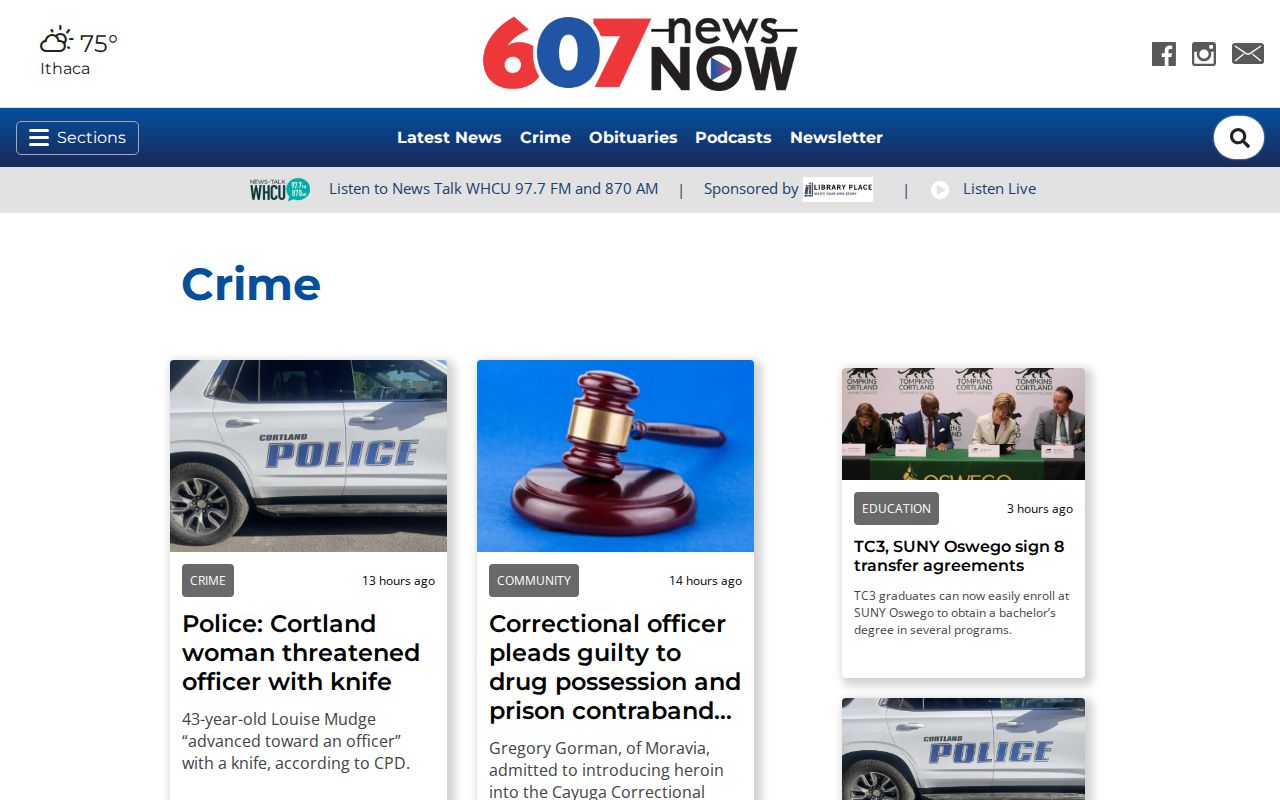
Story streams help with discovery across days. Still, a headline’s lead image proves nothing about jail custody or county photo policy. Cortland Voice adds a Crime and Courts section. Its reports draw from City Police, the Sheriff, State Police, and Homer Police. Updates land often. Use these outlets to spot an agency and a date, then turn to the agency record and the court for the disposition.
Several Cortland Arrest Jurisdictions
Place names can mislead. “Homer” may mean the Town, the Village, or just a broad news label. The Town leans on the county Sheriff, while the Village runs its own police department. Sheriff and city police records stay separate. Either one can end in county-jail custody. SUNY Cortland adds a campus stream. The official University Police crime and service log posts monthly entries with a case number, date and time, incident type, disposition, and address.
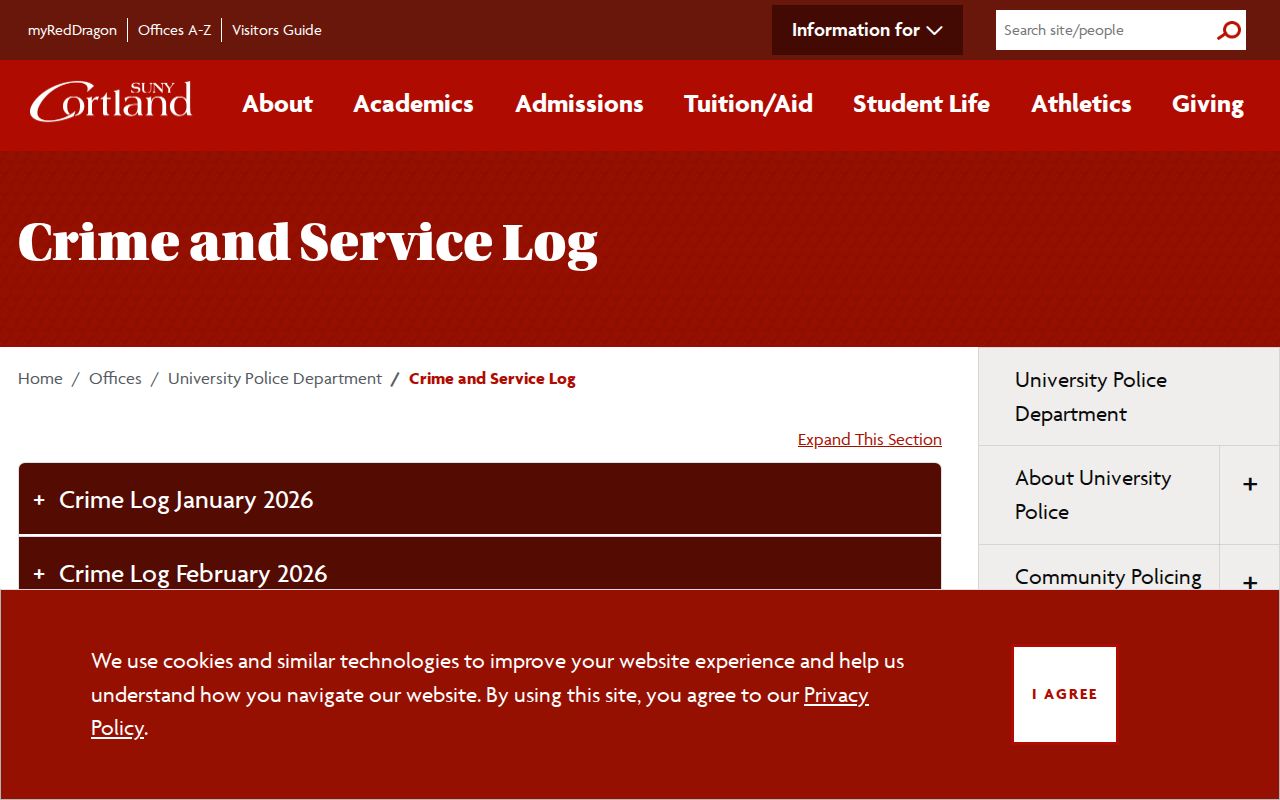
The campus log stands on its own. It does not equal a jail booking. Note: Use the named arresting agency when requesting a report, even if the headline only gives a town or county label.
Unofficial Cortland Arrest Windows
Beyond official sources sits the RecentlyBooked Cortland County page. It covers a 30-day window and says it refreshes several times daily. Entries list a booking ID, date and time, agency, and alleged charges. Physical details and photographs round out each listing. Those fields help with discovery. Still, the page is neither the Sheriff nor a court. Results can be stale, incomplete, or frozen after a case moves on. Cross-check anything against VINE, the jail, the arresting agency, and the court. Cortland County hosts no official photo roster. A third-party booking photo proves nothing about county practice. The older results page shows how the site stacks multiple pages of results.
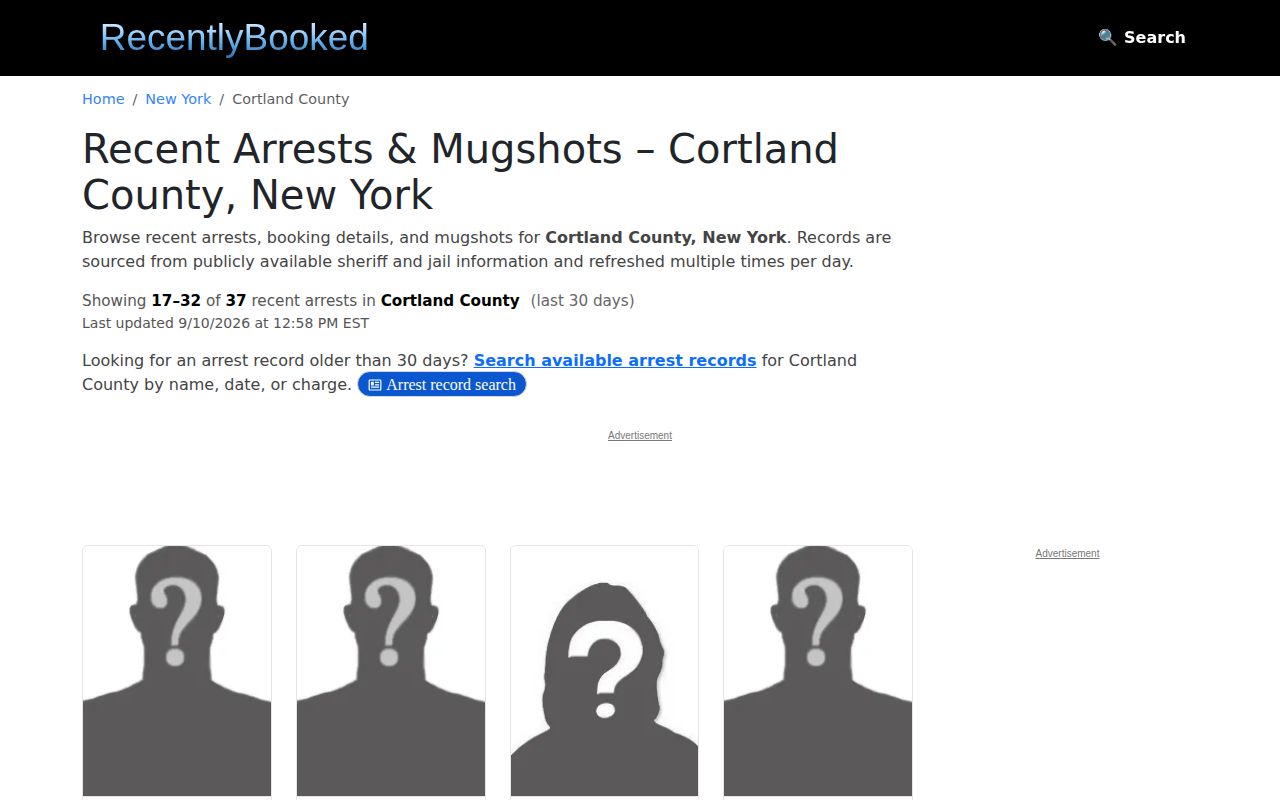
The page is an unofficial archive layer, nothing more. Treat it as background, not as a gallery or an authoritative arrest record.
Cortland Arrest Archives Past Online Windows
How long something stays online is not the same as how long it is kept. VINE drops records roughly two weeks after release and keeps no historical database. RecentlyBooked leaves items up for about 30 days. The Sheriff's release stream carries no archive-depth promise. So when a booking entry vanishes from the web, several explanations fit. It may have rolled off or been sealed. It may never have appeared online. Or it may sit with another agency in a separate record series.
Older material takes a direct request. Ask the Sheriff Records Division, or whichever agency made the arrest. New York's LGS-1 retention framework sorts arrest summaries, case investigations, identification files, and photos into distinct series. No single public Cortland booking-photo retention period exists. A county office may say a record was transferred. The County Clerk or Records Center can say where the official copy lives.
Newspaper research fills a different gap. The New York State Library's Cortland holdings cover microfilm and local titles. They document publication history rather than current custody.
Cortland Crime Data Is Not Arrest Data
The DCJS Cortland Index Crimes report counts reported crime agency by agency. It measures reports, not arrests. Treat it as crime data, never as a booking log. Reports, arrests, appearance tickets, releases, and jail admissions are separate events. So a jump in an index category tells you nothing precise about who actually landed in the Cortland County jail.
Each record type answers a different question. The arrest log lists selected events. VINELink shows participating custody. A booking record documents intake, and the court record carries the disposition.